

Introduction
Artificial intelligence (AI) is rapidly reshaping various sectors, including higher education and its management. It holds significant promise for addressing critical educational challenges such as improving administrative efficiency, enhancing decision-making processes, and optimizing resource allocation. However, the integration of AI into higher education management also brings a host of challenges that must be carefully navigated. These include inadequate digital infrastructure, the need for substantial capacity building, and the imperative to address ethical and data privacy concerns.
The German Academic Exchange Service (DAAD) and the African and Malagasy Council for Higher Education (CAMES) have established a long-standing partnership aimed at enhancing higher education systems with particular emphasis on the quality assurance dimension. Recognizing the transformative potential of AI, DAAD and CAMES are organizing this event in the framework of the DIES programme focused on „Artificial Intelligence in Higher Education Management– Potentials and Risks for Internationalisation, Quality Assurance and Administration“ to explore both the opportunities and obstacles associated with this technological revolution within higher education management in Africa and Europe.
This will be in the form of a keynote and a panel discussion with possibilities for the public to interact.
DAAD-CAMES Web Seminar
Please join the DAAD-CAMES Web Seminar by clicking on the button,
starting on October 23 2024, 13:00 – 15:30 (CEST) / 11:00 – 13:30 (UCT/GMT)
Background of the event
In 2020, the Conseil Africain et Malgache pour l’Enseignement Supérieur (CAMES) and the German Academic Exchange Service (DAAD) signed a Memorandum of Understanding. As part of this cooperation, the two institutions are organizing a partner event with the aim of increasing knowledge about current challenges and projects in the region of the French-speaking countries of Africa as well as Germany and Europe and exchanging ideas on current higher education topics.
The event is organized through the DIES (Dialogue on Innovative Higher Education Strategies) program, which is jointly coordinated by the DAAD and the HRK and is funded by the Federal Ministry for Economic Cooperation and Development (BMZ) and uses a range of measures to support universities in developing and emerging countries in professionalizing institutional management processes, aligning training courses with international quality standards and expanding research capacities.
Keynotes
Keynote 1
Keynote 2
Livestream
Sli.do
Livestream
Sli.do
Workshops
Bitte beachten Sie, dass dieser Bereich nur für Mitarbeitende zugänglich ist.
Workshop Session I (parallel): 10:25 UTC (11:25 CET)
Breakout Room 1: Digitalisierung
Prof. Claude Lishou, CAMES / Kathleen Clancy, DAAD
Breakout Room 2: Qualitätssicherung
Zakari Lire, CAMES/ Berit Stoppa, DAAD
Workshop Session II (parallel): 12:30 UTC (13:30 CET)
Breakout Room 1: Internationalisierung
Prof. Jean-Claude Bationo, CAMES/ Gudrun Chazotte, DAAD
Breakout Room 2: Hochschul- und Forschungskooperationen
Dr. Saturnin Enzonga-Yoca, CAMES/ Stefan Bienefeld, DAAD
Stadtführungen
Tour durch Bonn: 15:00 UTC (16:00 CET)
Tour durch Ouagadougou: 16:00 UTC (17:00 CET)
Speaker
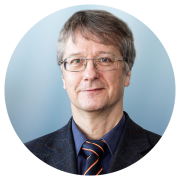
Photo: © private
Dr Klaus Birk
Dr Klaus Birk studied Chinese Studies, Political Science and Philosophy at Munich University and Peking University. From 1992 to 1993 he was a Visiting Scholar at the University of Michigan, Ann Arbor. From 1995 to 2001 Dr. Birk taught at Leipzig University and did research on poverty alleviation in China. Since 2001, he has worked at the German Academic Exchange Service Exchange (DAAD), first as Head of Section “China and Mongolia” and then as Head of Division “Asia-Pacific”, Head of Division “Knowledge and Network” and Director of the National Agency for Erasmus+ for Higher Education. Since February 2020 he is the Director of the Projects Department of DAAD.
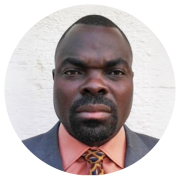
Photo: © private
Prof Dr Eustache Banza-Nsomwe-a-Nfunkwa
Mr. BANZA NSOMWE-A-NFUNKWA Eustache is a Member of Parliament in the Democratic Republic of Congo and Professor at the Faculty of Psychology and Educational Sciences, University of Kinshasa. He holds a PhD in Educational Technology, specializes in Distance Education and is a former Academic (and Administrative) Secretary General of several Congolese academic institutions. As author of the first approved computer textbooks for primary and secondary education in the DRC, he has published several scientific articles on New Information and Communication Technologies (NICT) in education. He has been a principal researcher for international studies financed by the African Development Bank and a member of the DEASA/SADC scientific committee. As supervisor of 30 master’s theses and 21 doctoral dissertations, he plays a key role in the development of distance education in the DRC and the SADC region.
Photo: © private
Prof Dr Eugène C. Ezin
Mr Eugène C. EZIN has been full Professor of Computer Science and Artificial Intelligence since 2018. He is the Director of the Institute de Formation et de Recherche en Informatique at the University of Abomey-Calavi. His research areas include Artificial Intelligence, Automatic Natural Language Processing, Signal and Image Processing, Cryptography, Blockchain, AI in education, etc. He has published over 120 scientific publications, including indexed and abstracted conference proceedings, journals and book chapters. He has supervised or co-supervised more than a dozen doctoral theses in computer science. He was named Champion in Education by the DSI Awards in 2022 and Director of the Best School in Computer Science. As expert in e-Learning, he has several other titles to his credit.
Photo: © private
Prof Dr Thomas Hoffmeister
Thomas Hoffmeister, born 1958, studied biology at the University of Kiel, Germany. He received his doctorate in 1992 and was research assistant and associate at Univ. Kiel until 2004. 1995-1996 he did a Post Doc at Simon Fraser University in Burnaby, B.C. in Canada. He received a professorship in population and evolutionary ecology at the University of Bremen in 2004 and was retired in 2024.
Thomas Hoffmeister has served as Vice-President for Teaching and Studies at the University of Bremen from 2014 to 2022, was responsible for the university’s system accreditation in 2016 and re-accreditation in 2022, the applications to the Teaching Quality Pact 2017 -2020 on research-based learning and 2021-2024 to the Foundation for Innovation in Higher Education on digitalisation. He has been co-founder and chairman of the network of vice-presidents, con- and prorectors for teaching and studies at universities from 2017 to 2022, a member of the Standing Commission for Teaching and Studies of the German Rectors‘ Conference from 2019 to 2022, a member of the Scientific Advisory Board of the Foundation for Innovation in Higher Education since 2021. He repeatedly served as advisor for the Peer-to-Peer-counseling of universities by Hochschulforum Digitalisierung.
Photo: © private
Dr Miné de Klerk
Dr Miné de Klerk is an expert in higher education and digital transformation. She is currently the National Manager for Design and Future Learning at Eduvos, where she also chairs the institution’s artificial intelligence (AI) committee. Dr de Klerk holds a Ph.D. in Higher Education from Stellenbosch University and an MBA from the University of Cape Town’s Graduate School of Business.
Before joining Eduvos, she led hybrid and online learning initiatives at Stellenbosch University, where she directed the university’s strategic response to the increasing demand for flexible and technology-mediated learning solutions. She has also consulted for various international higher and adult learning organisations, including universities, NGOs, and funding bodies across Europe, Africa, and Asia.
Dr de Klerk’s research focuses on how higher education institutions can navigate the changes brought about by emerging technologies, with a particular emphasis on Artificial Intelligence and its impact on the Global South. Additionally, she has been a discussion panellist and speaker at numerous Asian, European and African forums on AI in higher education.
Photo: © private
Ass Prof Ndeye Massata Ndiaye
Associate Professor of Computer Science at Cheikh Hamidou Kane Digital University
Ndeye Massata Ndiaye is the current director of UNCHK’s multidisciplinary Doctoral School. She is a specialist in digital education, conducting research in learning analytics, AI applied to education and offline tools for e-learning platforms. In addition to distance learning, she is interested in training design, educational planning and quality assurance. She is the author of several scientific publications on computerized human learning environments (CHLE) and quality assurance. Ms. Ndiaye has developed several educational strategies for countries in sub-Saharan Africa.
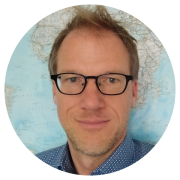
Photo: © private
Tobias Wolf
Tobias Wolf is Head of Section for Development Cooperation: Partnership Programmes, Alumni Projects and Higher Education Management at the German Academic Exchange Service (DAAD). In this role, he is responsible for the overall coordination of the programme “Dialogue on Innovative Higher Education Strategies (DIES)” funded by the German Federal Ministry for Economic Cooperation and Development (BMZ).
With training courses, dialogue events and regional sustainability activities, the programme offers a bundle of measures with which higher education institutions in the Global South can align their education programmes with international quality standards, expand their research capacities, develop their organisational structures competitively and strengthen the competencies of their university leaders. DIES offers training courses, dialogue events and regional sustainability activities that enable universities in the Global South to align their education programmes with international quality standards, expand their research capacities, develop their organisational structures competitively and strengthen the competencies of their university leaders.
In addition, he has been involved in the implementation of several EU-funded projects dealing with quality assurance and harmonisation processes in higher education in countries of the Global South.
Tobias Wolf joined the DAAD in 2002, initially working at the National Agency for EU Higher Education Cooperation. He holds a Magister Artium in Spanish and Latin American Studies, Literature and Sociology from Bielefeld University, Germany. Tobias Wolf spent one year of his studies at the University of Cádiz, Spain.
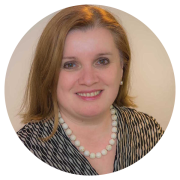
Photo: © private
Dr Diana Andone
Dr. Diana Andone (@diando70) is the Director of the Digital Education and Distance Education Department of Politehnica University of Timisoara, Romania, responsible for planning and implementing digital education and associate professor in multimedia, interactive and web technologies. Since 1998, she teaches course modules in universities from UK, France, USA, Finland, Italy, Greece. She has extensive research experience with intense publication (over 17 books, 100 research papers, 11 Best paper Awards, keynote speaker at major academic and innovation events, reviewer at 6 major journals and several other publications, associate editor at IEEE Transactions on Education, co-chair at several IEEE conferences), and more than 30 research and educational international projects. Dr. Andone is EDEN Senior Fellow, IEEE Education Society 2021 Distinguished Chapter Leadership Award winner, EDEN Vice-President for Communication and Communities (2018-2021), and member in IEEE Education Society Board of Governors (2021-2023), IEEE Education Society VicePresident for Conferences and Workshops (2024-2025), in IEEE Romania Section the Educational activities Chair (2019-present), and in IEEE Romania Section the Educational activities Chair (2019-present) and in European Universities Association Digital Transformation Steering Committee. She also acts in the Board of Romanian NGOs (Pentru Voi Foundation), in Timisoara 2023 European Capital of Culture Task Force and in other voluntary organisations (Rotary International, past President RC Timisoara). She is passionate about the ubiquitous access to technologies and how they can be used to improve people’s life, she actively supports the use of OERs, MOOCs and the open education principles, developing UniCampus.eu for training for digital skills, recently on the implication of Generative AI in education and science, but also the local start-up movement, women in tech, and the digital culture. She initiated several projects for transforming communities, is invited as speaker at conferences and in the last 25 years involved in the digital education community movement in Romania, recently through the Together Online webinars and the digital culture and heritage with Spotlight Heritage Timișoara.
https://elearning.upt.ro/ro/diana-andone/
Moderation
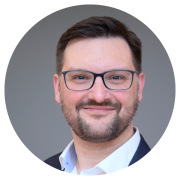
Photo: © privat
Björn Müller-Bohlen
Björn Müller-Bohlen designs and moderates international online and offline events in the fields of education, civil society and science. He works as a facilitator, supports organizational development processes and is passionate about open-space formats and co-creation.
Björn has a background in media and cultural studies, as well as in business and law. Before joining Bonn University as a researcher, where he oversaw the development and improvement of study programs and science communications, he was a trainer and consultant in the field of youth & adult education. Besides, he worked as a project manager for music & media productions. He served as an executive manager at the Forum of International Academic Sciences’ unit for Strategic Partnerships, developing projects and activities for transformative science. As co-founder of the Twin City Lab, he fostered international cooperation between cities, urban communities and civil society. Björn is a dynamic moderator with a passion for purpose-driven discussions and open-space formats.
German Academic Exchange Service (DAAD)
The DAAD is a joint organisation of German institutions of higher education and their student bodies, devoted to internationalising the academic and scientific research system. With its broad range of scholarship programmes, the DAAD enables students, researchers and university lecturers to take advantage of the best study and research opportunities. Since it was founded in 1925, more than 2.5 million scholars in Germany and abroad have received DAAD funding. Apart from the scholar ship programmes the DAAD supports the internationalisation of German universities, promotes German studies and the German language abroad, advises decision makers on matters of cultural, education and development policy and assists developing countries in establishing effective universities by means of special programmes.
The programme “Dialogue on Innovative Higher Education Strategies” (DIES) has been jointly developed and coordinated by the German Academic Exchange Service (DAAD) and the German Rectors’ Conference (HRK) since 2001. DIES is strengthening capacities in higher education management, both on individual and institutional level. It offers a wide range of tailored activities training courses, dialogue events and university partnerships. – These activities not only foster the competences of academic staff, but also contribute to the enhancement of institutional management at universities in developing countries. DIES focuses on three key partner regions: Africa, Spanish-speaking Latin America and Southeast Asia. Funding is provided by the German Ministry for Economic Cooperation and Development (BMZ).
"Dialogue on Innovative Higher
Education Strategies" (DIES)
Universities all over the world are operating in an increasingly dynamic environment shaped by global challenges. They are in intense competition for students, highly qualified researchers and third-party funding. This also applies to developing countries, where the demand for tertiary education has increased dramatically in recent decades.
In view of these developments, higher education management in all its forms is becoming increasingly important in the field of international development cooperation. The „Dialogue on Innovative Higher Education Strategies“ (DIES) programme has been jointly coordinated by the German Academic Exchange Service (DAAD) and the German Rectors‘ Conference (HRK) since 2001. DIES strengthens capacities in higher education management, both at individual and institutional level. It offers a wide range of tailor-made activities: training courses, dialogue events and regional sustainability measures. These activities not only promote the skills of academic staff, but also contribute to improving institutional management at universities in developing countries. DIES focuses on three important partner regions: Africa, Spanish-speaking Latin America and Southeast Asia. Funding is provided by the German Federal Ministry for Economic Cooperation and Development (BMZ).
CAMES (Conseil Africain et Malgache pour l'Enseignement Supérieur)
The Conseil Africain et Malgache pour l’Enseignement Supérieur (CAMES) is a regional management body for higher education and scientific research in 19 countries in West Africa, Central Africa, the Great Lakes region and the Indian Ocean: Benin, Burkina Faso, Burundi, Cameroon, Central Africa, Chad, Congo, Côte d’Ivoire, Democratic Republic of Congo (DRC), Equatorial Guinea, Gabon, Guinea, Guinea-Bissau, Madagascar, Mali, Niger, Rwanda, Senegal and Togo.
Created in January 1968 in Niamey, Niger, by the Heads of State of the Organisation Commune Africaine et Malgache (OCAM), it contributes to the promotion of harmonized higher education and research policies and systems through the action of its political and academic bodies, as well as through the statutory programs and projects it implements. In this respect, it has a common framework for the promotion of teachers and researchers from the universities and research centers in its area. Since 2012, as part of its strategic vision and with the support of partners such as DAAD, UEMOA, UNESCO and AUF, it has been implementing a vast quality assurance program, in line with its mission as a regional quality assurance and accreditation agency supporting the dynamics of structural transformation in member countries and their higher education and research institutions.